Choosing 260, 300 or 320 GSM for a heavyweight T-shirt
Hold a boxy tee by the shoulder seams and watch where the sleeve hem lands. One fabric folds toward the arm. Another holds the sleeve out like a shelf. Which shape belongs in your collection?
On this page
- Key takeaways
- Choose the weight by the way the tee will be worn
- Compare the face of two 300 GSM jerseys
- Give the collar its own approval
- A size L measurement sheet for the first sample
- Check what the wash changes
- Put 100, 300 and 500 pieces on the same quote sheet
- Buyer questions
- Sample your heavyweight tee
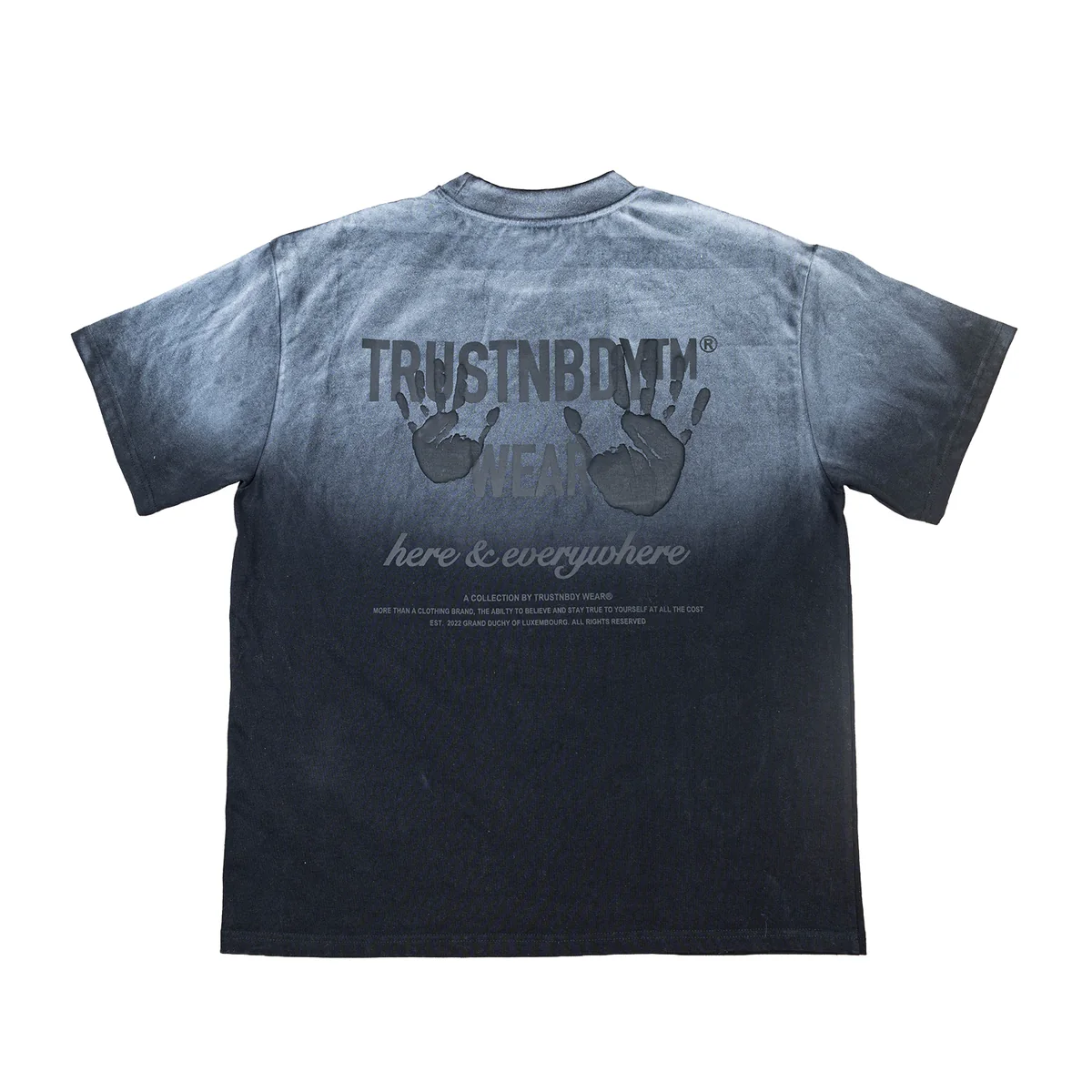
TOPSHOW Gradient Handprint T-Shirt. Use the back view to brief the silhouette and fade placement.
For a first sample, send us a tee with the drape you like and tell us where yours should differ. That gives us a starting point for choosing the jersey, cutting the neckband and testing the print on the finished garment.
Key takeaways
- For an everyday graphic tee, compare 260 and 300 GSM on the same pattern. Add 320 GSM if the sleeve needs to hold a stronger shape.
- Approve the neck opening and the visible rib height separately. A 2.8 cm band can still gape if it is cut too long.
- Sign off the dimensions, shade and artwork on a finished, washed sample. Keep that garment with the specification used for the bulk quote.
Choose the weight by the way the tee will be worn
GSM expresses grams per square meter of fabric. Two jerseys can both measure 300 GSM and feel different on the body. To narrow your choice, compare finished swatches in the same color, then make the two closest options into the same size. Keep the shoulder, sleeve opening and body length fixed for this trial. ASTM’s fabric weight test method
| Weight to trial | Buyer brief | Deciding check on the sample |
|---|---|---|
| 240–260 GSM | A graphic tee worn on its own in warm weather or under an open shirt. | Wear it in the intended color. Check opacity across the chest and whether the sleeve folds comfortably under another layer. |
| 280–300 GSM | A core boxy tee with a broad back print and room through the chest. | Compare the shoulder drop from the front and side. Sit down, then stand up and see where the front hem settles. |
| 320 GSM and up | A firm silhouette with a pronounced sleeve opening. | Try the smallest planned size. Bend the arm and feel the stacked fabric at the underarm and sleeve hem. |
Weight also affects the carton. Moving from 280 to 320 GSM adds 40 grams per square meter of shell fabric. If one cut set uses 0.80 m², that is 32 grams more per tee, or 9.6 kg across 300 tees before packing. Use the actual size mix and packed carton measurements for a freight quote.
Compare the face of two 300 GSM jerseys
If you want fine lettering on a clean chest, request a combed ring-spun jersey alongside a more textured option. Combing removes short fibers during preparation. Ring and rotor describe the subsequent spinning method. A carded yarn can also be ring-spun, so “carded” alone tells the printer very little about the finished surface. CottonWorks guide to cotton processing
Place a small print of your actual lettering on each swatch. Look at the counter inside the smallest letter and run a finger across the surrounding cloth. A smooth face may suit a thin wordmark. For a washed concert tee, the drier surface may be closer to the reference your designer picked. Compare both again after your proposed wash and keep the chosen swatch with its mill reference.
Give the collar its own approval
On a dropped-shoulder tee, a wavy neckband is easy to spot across a sales rack. Start with a sample band around 2.5–3.0 cm high if your reference has a substantial collar. Measure the exposed height from the joining seam to the folded edge. Also record the neck opening across the finished garment. Those two measurements answer different questions.
For a recovery trial, compare a cotton rib with a cotton/elastane 1×1 rib on the same neckline. Mark the band length, joining seam and stitch construction on each sample. Try the shirt on, take it off, lay it flat and inspect the front curve. Repeat after the agreed laundry cycle. If one band stands away from the neck, check its cut length and how evenly it was fed around the curve before changing the body pattern.
A size L measurement sheet for the first sample
These are example targets for a boxy crewneck, measured flat after washing. Start with a garment your customer already wears and replace the values with your own. Both teams should use the same sketch, units and tolerance for each point.
| Point of measure | Target (cm) | Approx. inches | Example tolerance (cm) |
|---|---|---|---|
| Half chest, 2.5 cm below armhole | 61.5 | 24.2 | ±1.0 |
| High shoulder point to bottom hem | 72.5 | 28.5 | ±1.5 |
| Shoulder seam to shoulder seam | 58.0 | 22.8 | ±1.0 |
| Shoulder seam to sleeve hem | 23.5 | 9.3 | ±0.8 |
| Sleeve opening, flat | 22.0 | 8.7 | ±0.5 |
| Visible collar rib height | 2.8 | 1.1 | ±0.2 |
If the shoulder moves outward while sleeve length stays fixed, the sleeve hem travels farther down the arm. Photograph the fit from the side before shortening the sleeve. Once size L is approved, review the smallest and largest sizes with the same artwork placement. Boxy fit and pattern guide
Check what the wash changes
Label one sample, measure its length and half chest, then put that same piece through the planned finish. Let it dry and relax before measuring again. For example, a length that changes from 75 cm to 72 cm has shrunk 4%. If the approved target is 72.5 cm, the sample lands within the example length tolerance above. Record the separate width result and compare it with the chest target. Length change alone cannot tell you how the shirt will fit.
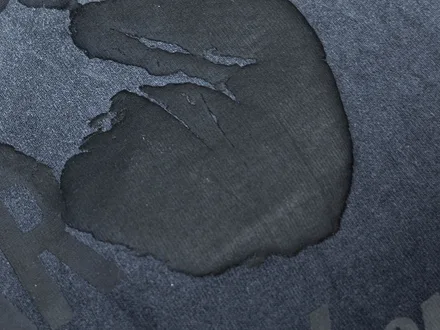
Decide when to apply the artwork by the finish you want to approve. For a bright logo on a faded ground, trial the print on the washed panel. For a graphic intended to wear with the garment, print a second panel before washing, then check which small ink details survive. Keep the signed trial with the artwork version and wash reference. Printing and washing guide
Put 100, 300 and 500 pieces on the same quote sheet
For this custom tee, the minimum is 100 pieces per style and colorway, with S–XL sizes mixed within that run. A 100-piece black order could contain 20 S, 30 M, 30 L and 20 XL. Adding a second colorway brings its own 100-piece minimum.
When you request three quantity tiers, hold the specification constant. Give us the finished GSM, colorway, size split, collar construction, wash sequence, artwork width, labels and packaging. Put any extra color or decoration in a separate option. That way you can tell whether a price difference comes from quantity or from changing the tee.
Ask for the sample fee, courier cost, any bulk credit and its conditions on separate lines. For an ocean quote, include the named FOB port. For delivery to your warehouse, include the ZIP code and ask which costs are included. Give us the date your stock must arrive so we can work back through transit, bulk approval and the sample round. Prepare a sampling tech pack
Buyer questions
Is 300 GSM too heavy for a summer drop?
Try 260 and 300 GSM in the intended fit. Have someone wear both in the conditions your customer will encounter. If the 260 GSM version already gives the sleeve shape and opacity you want, the extra weight may add little to this style.
Which fabric should we use for fine back lettering?
Start with the smoother face and print your smallest letter at production size. For solid spot colors, request a screen-print strike-off. For a tonal image, compare a digital trial on the same dyed ground. Judge legibility, feel and wash performance together.
How do we approve a garment-washed shade?
Choose physical light, target and dark references for the acceptable range. Compare the body and the rib under the same light, then check a finished tee against the signed set. A photo is useful for pointing out where a seam faded too far.
Sample your heavyweight tee
Send TOPSHOW a front and back reference, the size you want sampled, your artwork and quantities by color. Include one detail you would keep from the reference and one you want to change.