What to check where patterned pile meets a seam
Two pile jackets show how to review a leopard shoulder, a chest patch and a ribbed cuff before approving a textured outerwear sample.
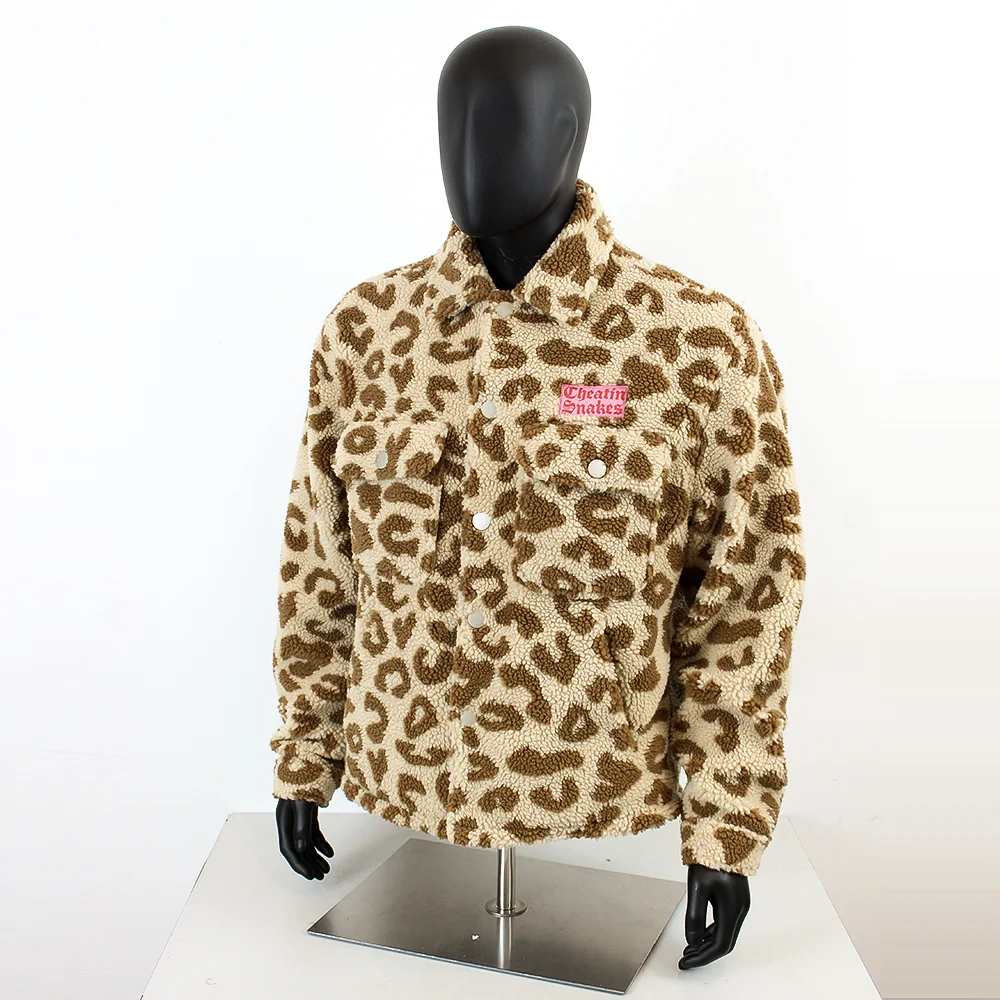
On the Leopard Pile Collared Jacket, a brown spot bends over the shoulder and disappears into the cream curls. On a flat swatch the spot has a clear outline. On a sewn jacket, part of that outline can disappear where the shoulder turns. If the shoulder looks pale in one photo, first find out whether the pile is lying in a different direction or whether the cut panel really does show more cream.
Read the shoulder in two directions
Fasten the jacket and put it on a form. Keep the form and the light still. Brush the pile toward the sleeve, photograph the shoulder, then brush it back and take the same frame. If the apparent stripe moves, mark the brushing direction on the approval photo. If a line stays in the same place, part the curls along the seam and check what is caught in the stitching before asking for a different pattern placement.

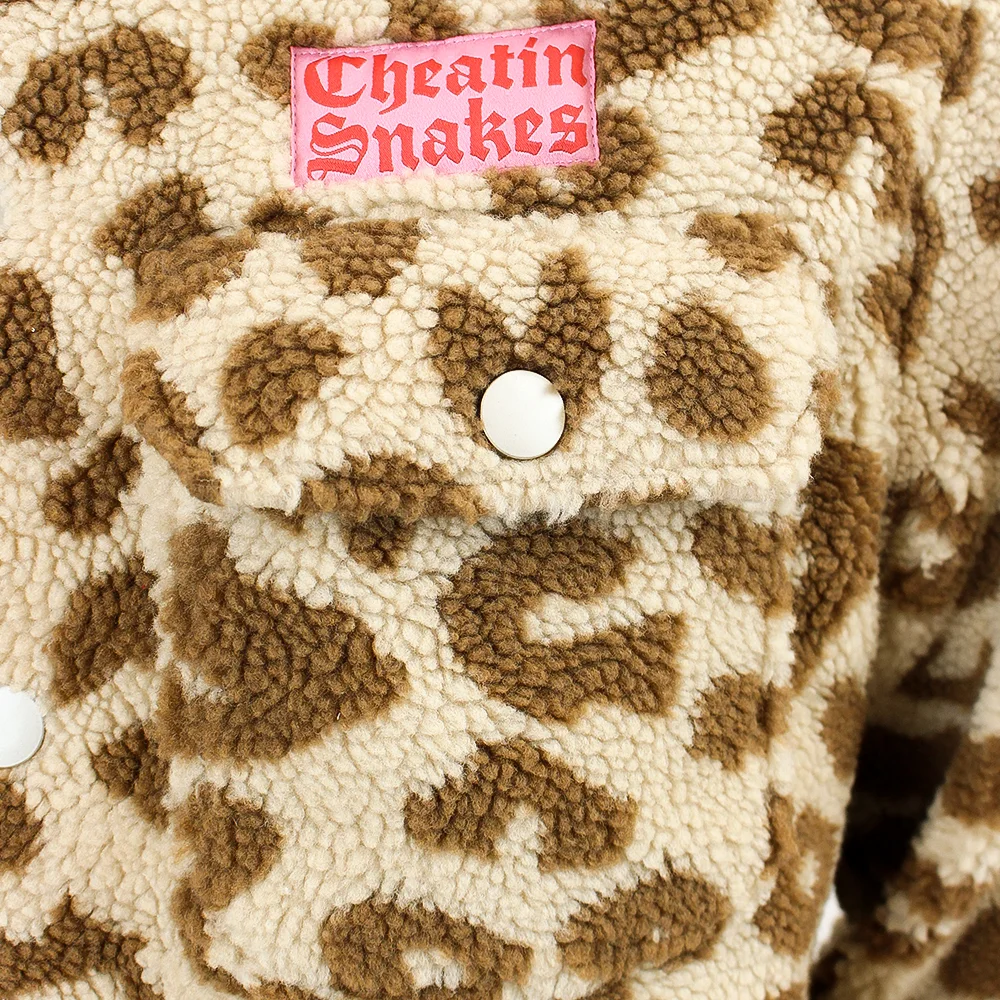
Check whether the patch border stays visible
The pink chest wordmark sits above a round fastening. In the close-up, the straight lower edge of the patch runs through an irregular field of brown and cream. Brush the pile up toward that edge, then let it settle. If the lower line of letters becomes hard to read, photograph it before moving the patch. The sample maker needs to know whether to change its position or clear pile from its border.
Try the cuff with the sleeve gathered
On the Camo Pile Hooded Jacket, the patterned sleeve gathers above a pale rib cuff. Put a hand through, release the cuff and bend the wrist. Record where the rib sits and whether the pile rolls over it. A useful sample note gives two separate decisions, such as “Keep the wrist opening. Reduce the bulk directly above the cuff seam.” That preserves the fit you approved while identifying the uncomfortable area.
