Contrast topstitching
A pale line of thread follows the edge of a pocket on a dark hoodie. The contrast draws attention to the distance between the stitching and the folded edge.
Discuss your design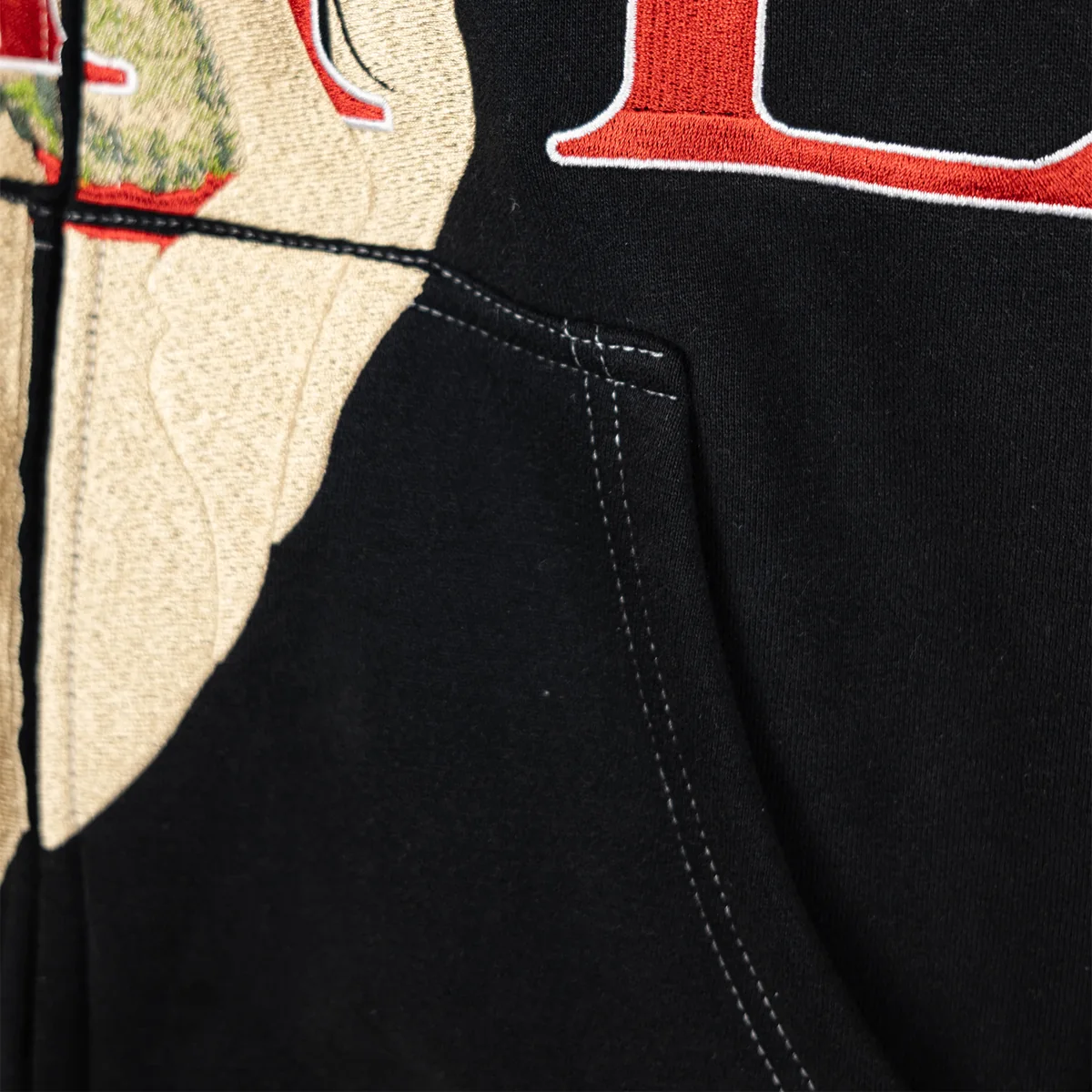
Detail photos
Pocket corner
The topstitch line turns at the upper corner of the dark pocket.
Pocket edge distance
Two narrow stitch lines follow the curved opening down the front panel.
Dropped shoulder seam
Parallel stitching follows the sloped shoulder seam beside the embroidered front.
Using a visible stitch line to draw the pocket
Topstitching runs on the visible side of the garment. A contrasting thread makes the direction of the line, the length of each stitch and the turns at a pocket corner easy to read. Its effect depends on the cloth beneath it as well as the thread shade.
Give the stitch line a measured path
Draw the seam and the visible topstitching as separate lines, especially around a shaped pocket. Mark the distance from the edge and show where one row becomes two or turns a corner.
Choose contrast at viewing distance
A fine pale thread can look very bright on black cloth up close and nearly disappear at arm’s length. Review alternative thread samples on the same pocket fabric. Include an actual corner so the thicker appearance at a turn is visible.

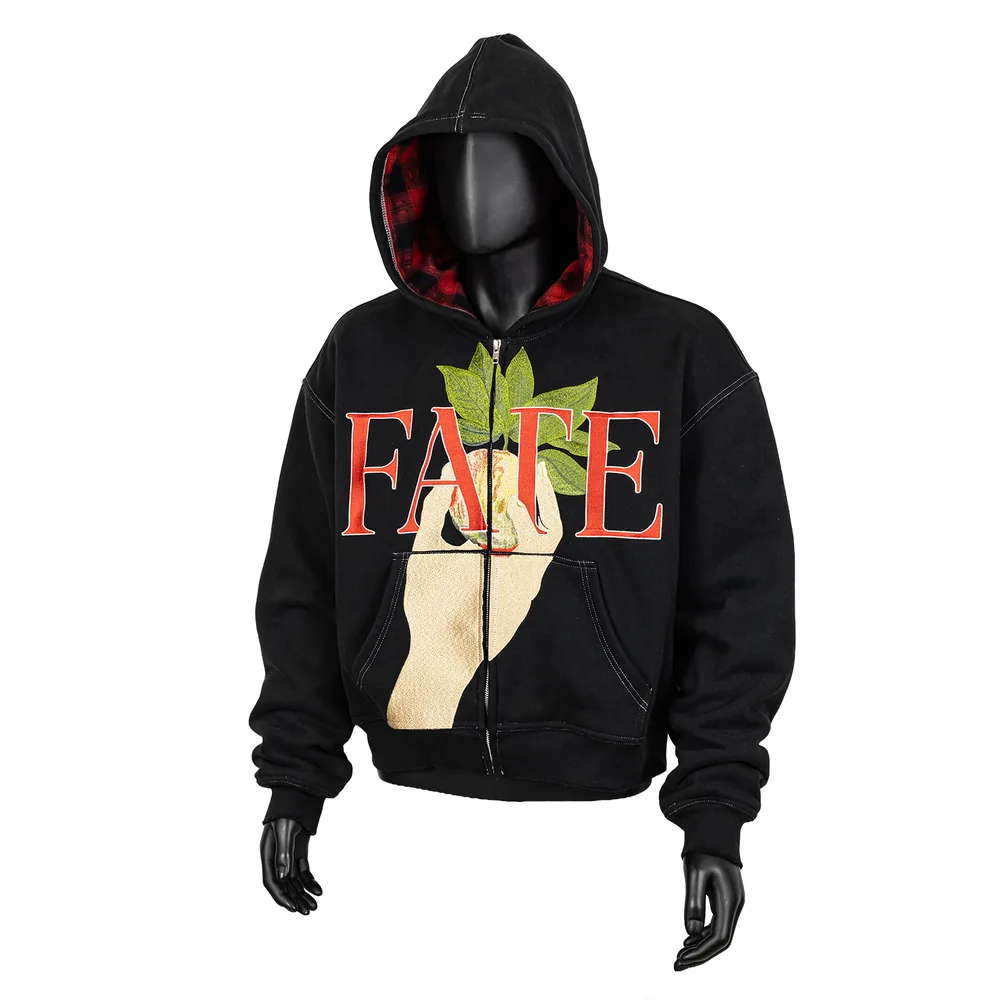 View Plaid-Lined Embroidered Zip Hoodie
What to check on the sample
- Thread visibility
- Compare thread shade and thickness on the chosen fabric. View the stitching from arm’s length as well as up close.
- Edge distance
- Specify how far the stitch line sits from the pocket edge. Check the straight sections and the turn at the opening.
- Start and finish
- Inspect the ends of the line and the pocket corners. Agree where overlapping stitches or reinforcement may show.
What to send for sampling
Start your sample brief- A stitch map identifying the visible rows, turns and start points.
- Thread shade and a sewn reference for the weight and stitch length.
- Pocket dimensions and a marked detail showing the required edge distance.
Tell Us About Your Next Collection
Share enough detail for our Dongguan team to understand the garment and discuss a sample. Include whatever you have ready from this list.
- A product link, sketch, tech pack or reference garment
- Your quantity by size and color, and any target fabric or finish
- Artwork and label requirements, with file links if you have them
- The delivery country and the date you are working toward
Contact Michael Wang