Gradient color finish
The blue-gray tee shifts from a pale ground to a deep charcoal tone. The sleeve shows how the transition reads over a short distance and around a folded edge.
Discuss your design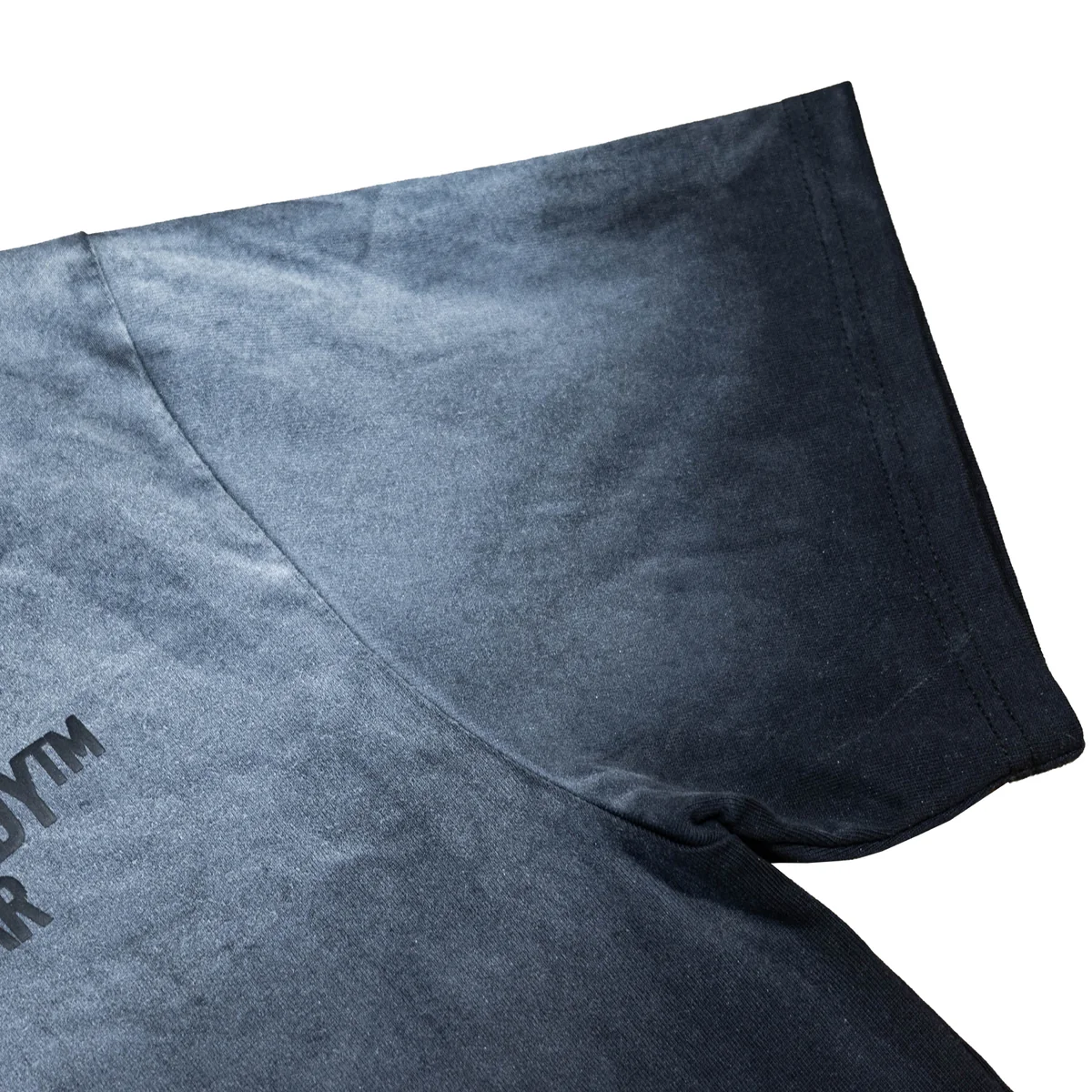
Detail photos
Sleeve fade
Pale blue-gray deepens toward the outer sleeve and its folded edge.
Neckline shade
The dark ribbed collar meets the lighter, mottled fabric of the upper body.
Body transition
The front panel carries the transition from a pale upper chest to a dark lower body.
Setting the direction and length of a fade
A gradient is specified by its color path across the garment. Two tees can share the same light and dark shades yet look quite different if the transition starts higher or occupies a narrower band. A front or back sketch with marked shade positions gives the sampling team more information than two color chips alone.
Draw a mid-tone reference
Mark where the fabric should be halfway between the two end shades. For a size range, decide whether that position follows a fixed measurement from the neck or moves with body length.
Coordinate the sleeves with the body
Lay the tee flat and follow the shade from the shoulder into the sleeve. Decide whether you want a continuous band across the garment or an independent fade on each sleeve. Ask to see both sides on the first sample.
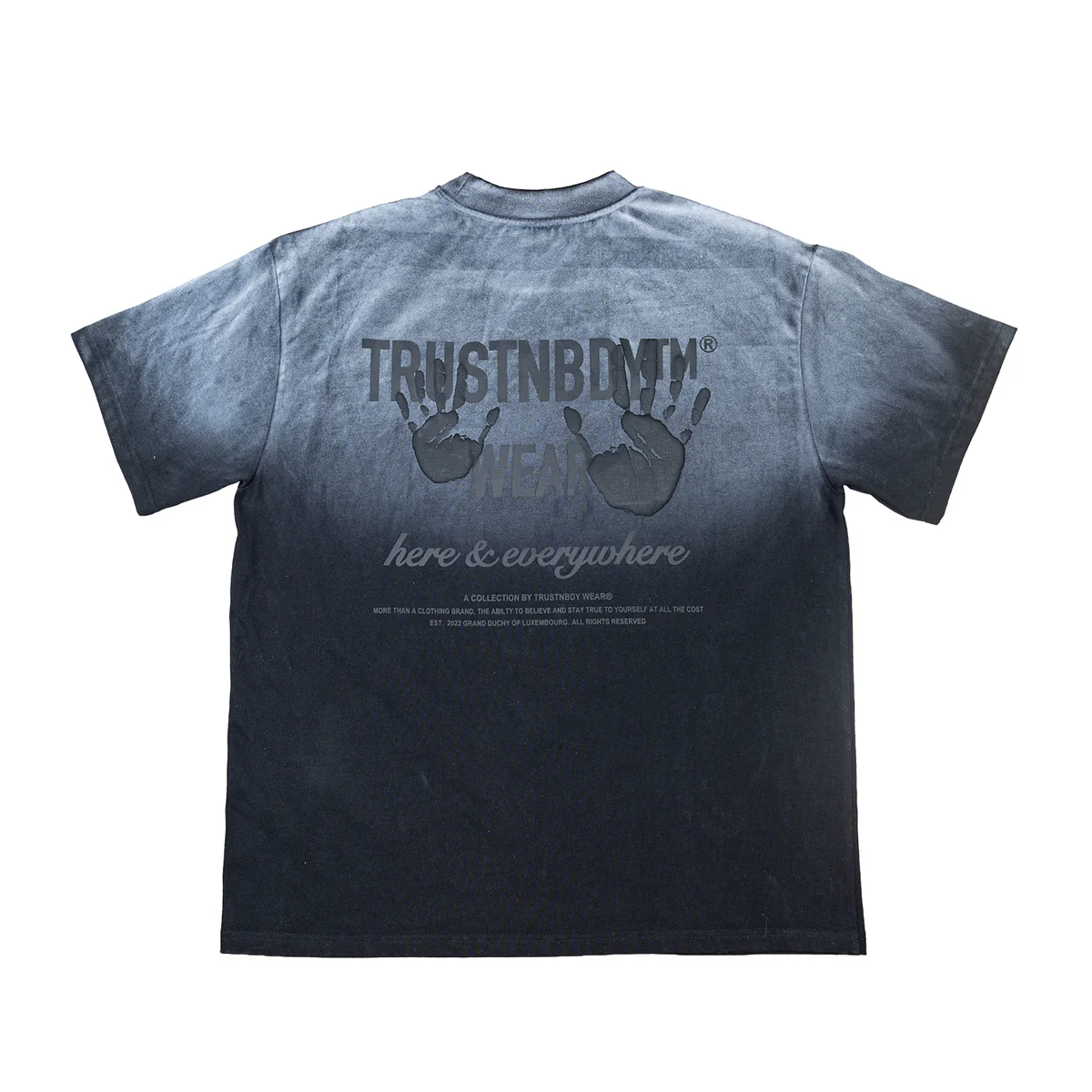
 View Gradient Handprint T-Shirt
What to check on the sample
- End shades
- Send a swatch for each end of the fade. Compare both on the selected fabric in the same light.
- Transition width
- Mark where the fade begins and ends on the garment sketch. Inspect the middle tone for abrupt bands.
- Sleeve and body
- Lay the sleeve beside the body and check where their tones meet. Record the intended direction of the fade for each panel.
What to send for sampling
Start your sample brief- Light, middle and dark shade references on a front and back sketch.
- The intended transition length and its position on at least one named garment size.
- Artwork overlays and separate sleeve instructions wherever the fade affects print contrast.
Tell Us About Your Next Collection
Share enough detail for our Dongguan team to understand the garment and discuss a sample. Include whatever you have ready from this list.
- A product link, sketch, tech pack or reference garment
- Your quantity by size and color, and any target fabric or finish
- Artwork and label requirements, with file links if you have them
- The delivery country and the date you are working toward
Contact Michael Wang