Mesh panel construction
An open mesh body meets a solid upper panel on this jersey. The horizontal join separates the smooth shoulder from the perforated surface below.
Discuss your design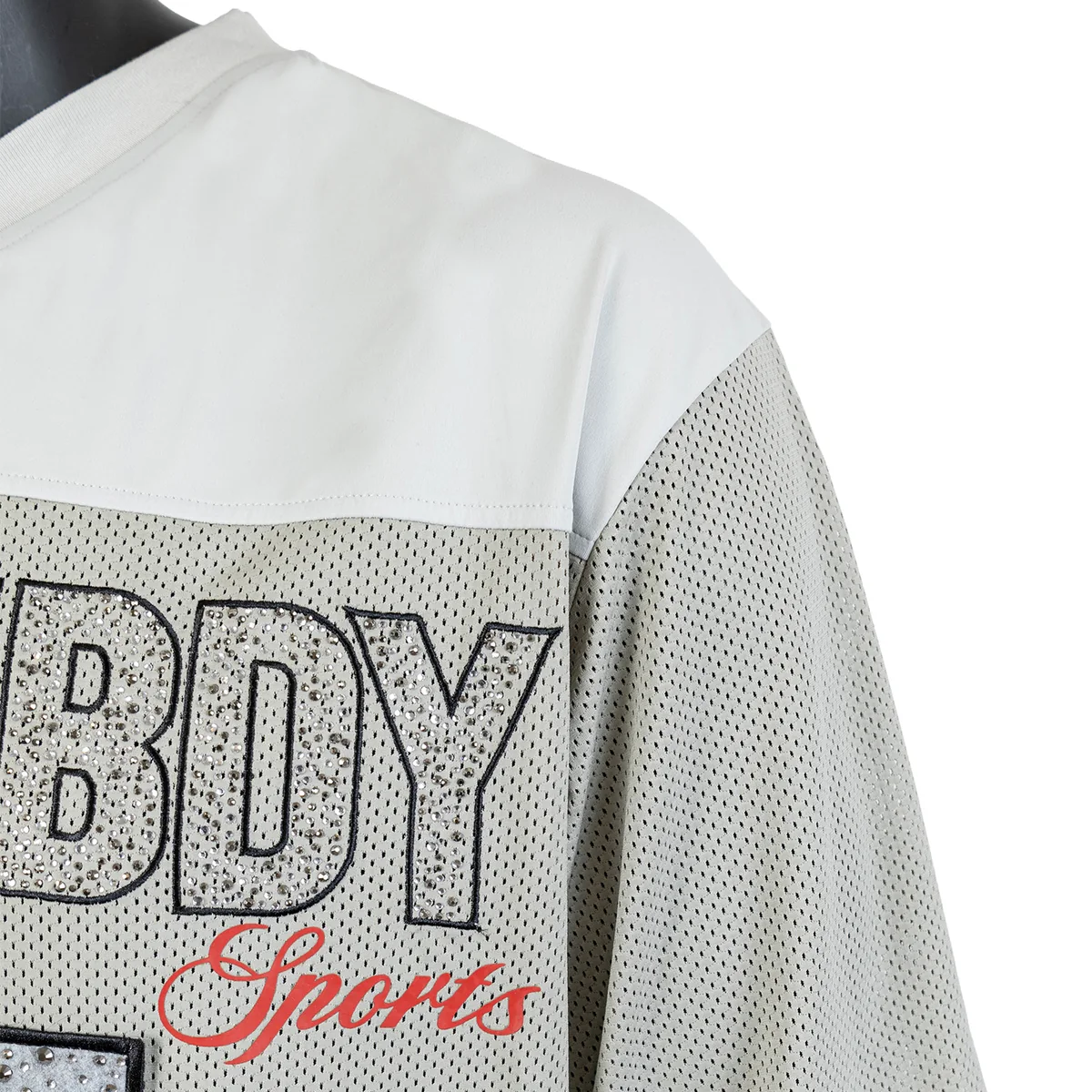
Detail photos
Shoulder junction
The smooth upper panel meets the open mesh of the body and sleeve.
Back yoke seam
A row of stitching divides the solid lettered yoke from the perforated back panel.
Mesh at the hem
The open mesh continues beneath the back label and down into the folded hem.
Joining open mesh to a solid shoulder
A mesh panel changes both coverage and stretch within the garment. The solid shoulder on this jersey gives a smooth area near the neck, while the open body shows more of the layer beneath. The line where they join defines the proportion of the two surfaces from front and back.
Place the join before placing artwork
Draw the finished shoulder depth and the top edge of the number or lettering on the same sketch. If the motif crosses the join, ask for an actual trial. The open and solid fabrics support decoration differently.
Review the panel under movement
Compare stretch along the same direction on both fabrics. Try the jersey over the intended base layer and raise the arms. Look for a ridge at the join or one panel hanging lower after the garment relaxes.

 View Rhinestone Number Mesh Jersey
What to check on the sample
- Mesh openness
- Place the mesh over the intended underlayer to judge coverage. Check the appearance when the fabric stretches.
- Panel boundary
- Mark the depth of the solid shoulder panel from the neck. Check the join on both sides with the jersey laid flat.
- Joining seam
- Compare the stretch of the two fabrics and inspect their join after sewing. Pull gently across it to check for rippling or gaps.
What to send for sampling
Start your sample brief- Swatches showing mesh opening, weight and color over the intended underlayer.
- Front and back yoke depths and the position of the sleeve joins.
- An artwork overlay identifying areas that need support for badges or numbers.
Tell Us About Your Next Collection
Share enough detail for our Dongguan team to understand the garment and discuss a sample. Include whatever you have ready from this list.
- A product link, sketch, tech pack or reference garment
- Your quantity by size and color, and any target fabric or finish
- Artwork and label requirements, with file links if you have them
- The delivery country and the date you are working toward
Contact Michael Wang